
Weekly Notice
Please check back weekly for our latest updates on upcoming events, newly added documents, and more. Check now.
This week's suggested topic of consideration: Tending Your Garden of Consciousness
Dear friend on the Path,
Think of walking down a residential street and noticing the yards. They probably vary in condition. Some are planted so neatly and cared for, some clearly indicate the owner is either not interested or able to plan or care for their garden, some are in between those two extremes. In the first example there are no weeds and the plants that are planted have received the water and nutrition they need to flourish and be healthy. When weeds appear, they are recognized and discouraged from growing.
For this week, let’s try to imagine that your mind is a garden. There are many seeds in this garden.
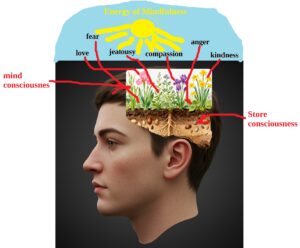
Some that have a positive feeling associated with them, like compassion and joy, and some that cause discomfort, like anger and jealousy. What is the condition of your garden right now? Which seeds are flourishing, the beneficial ones or the hurtful ones?
For the garden in your yard, you have tools that enable you to work on and maintain it, like a rake, a shovel, the sun, and water.
What tool or tools may you use on your mind garden? Mindfulness is the tool of choice. It enables you to recognize when an unbeneficial emotion or feeling is arising. With that awareness you may use the RAIN method. The RAIN method is a four-step mindfulness and self-compassion tool used to process difficult emotions and reduce stress. Originally coined by meditation teacher Michele McDonald and popularized by psychologist Tara Brach, the acronym stands for Recognize, Allow, Investigate, and Nurture.
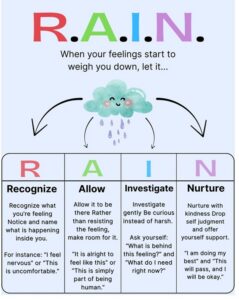
This week, it is suggested that you review the RAIN method and see how using it may help you “Name It To Tame It” when negative emotions arise in your garden of consciousness. And how to nourish and cultivate positive emotion and feeling seeds. Recognizing and cultivating positive feelings involves building daily habits like gratitude journaling, mindfulness, and physical movement to expand your mental resilience, counter negative stress, and improve your overall well-being.
Recognizing Positive Feelings
- Notice physical cues: Pay attention to relaxed muscles, steady breathing, or a burst of energy.
- Name the emotion: Label specific states like joy, serenity, curiosity, or gratitude rather than just saying "happy".
- Track triggers: Write down the people, places, or tasks that spark these good feelings.
Cultivating Positive Feelings
- Practice gratitude: Reflect daily on small or big things you appreciate.
- Savor the moment: Slow down and fully focus on a pleasant experience using all your senses.
- Move your body: Engage in regular exercise to release mood-boosting endorphins.
- Do good deeds: Help others through small acts of kindness to foster connection and joy.
Keeping your garden of consciousness healthy,
David
